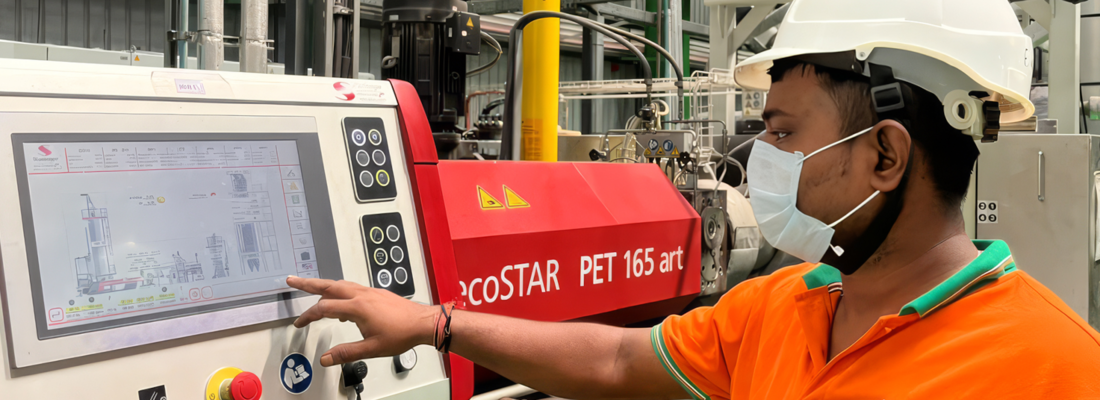
“Starlinger’s world class recycling technology allows us to produce EFSA and US FDA compliant rPET chips, putting us in line with recyclers worldwide that have this advanced in-house capability,” said Ankit Jain, Managing Director of Ribotl. With the Starlinger recoSTAR PET 165 art PET bottle-to-bottle recycling system, commissioned during the first half of 2025, RiBotl has the capacity to produce up to 16,000 metric tonnes of bottle-grade rPET pellets per year.
“We specialise in post-consumer waste and turn it into food-grade material, converting a strongly variable raw material into a traceable and consistent high-quality product,” explained Jain. RiBotl sources the post-consumer PET bottles through the informal waste collection system through which more than 90 percent of the PET bottle waste in India is collected.
Food-contact compliance
After its foundation in 2023, RiBotl started recycling operations with a state-of-the-art rPET flakes manufacturing plant. Equipped with 4-stage sorting and cleaning, the company produces high-quality recycled PET flakes which are marketed under the brand name DiamondPET. The rPET pellets produced on the Starlinger line are an extension of this brand and sold as DiamondPET chips.
After achieving the final FSSAI (Food Safety and Standards Authority of India) authorisation for their PET recycling process in March 2026, RiBotl is currently one of 13 Indian rPET manufacturers that supply food-contact rPET for packaging applications such as beverage bottles, food containers, trays and other types of PET packaging. Important conditions for FSSAI authorisation include maintaining the documents, records, certificates, audit and test reports specified in the FSSAI FCM-rPET Guidelines. Every authorised Indian recycler has to comply with these conditions; in addition, the FSSAI can inspect the facility and records before and after authorisation.