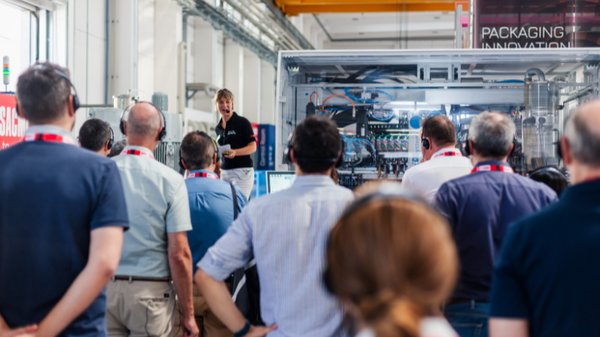
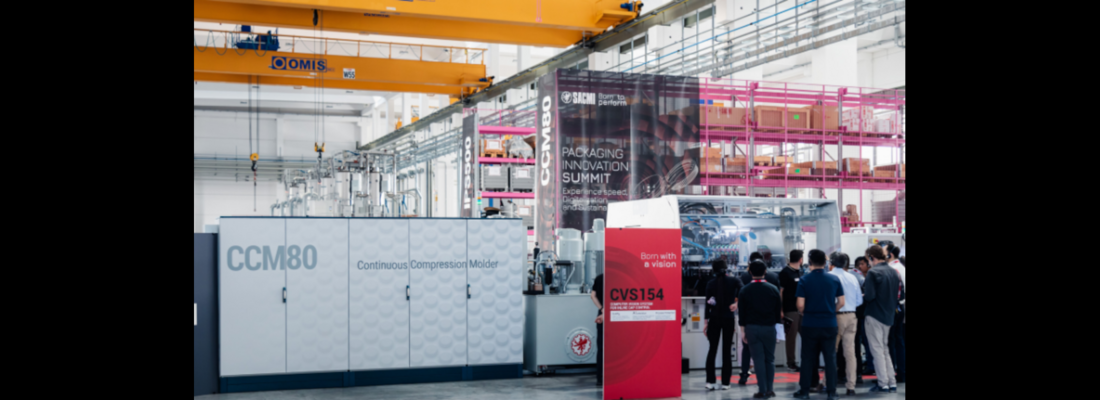
With over 300 specialist operators from 66 countries around the world, the Packaging Innovation Summit 2026 has come to a close at SACMI. The two‑day international event was dedicated to the technologies and trends that are transforming the world of rigid packaging. The Summit brought together customers, partners, experts, start‑ups and stakeholders from across the supply chain. They discussed the main challenges facing the sector: productivity, sustainability, digitalisation, process control and new materials.
Markets, technologies, and open innovation
The initiative has confirmed SACMI’s role as a global technology partner for the evolution of packaging, capable of combining high industrial performance, quality and automation with a strong focus on new market trends.
The first day began with a session dedicated to the key strategic issues facing the sector. These included high‑speed solutions for caps and preforms, circular and green technologies, sustainable materials, food‑grade recycled resins, digital tools, control rooms and advanced services, with a focus on the current trends shaping the PET and rPET markets.
Particular attention was also paid to the role of open innovation, with distinguished guests including key figures from the world of strategic venture capital. There were also contributions from start‑ups as drivers of innovation along the value chains.
Digitalisation and the SACMI Control Room
Among the key themes of the Summit was the digitalisation of production processes, with a focus on the SMARTPACK™ and SMARTCARE™ services and on the new SACMI Control Room model. This process‑control hub has been developed with the aim of enabling new functions for diagnostics, predictive and proactive maintenance, recipe and process optimisation, KPI monitoring and continuous improvement.
Through data collection and analysis, automated alerts, digital troubleshooting and integration with support services, SACMI has demonstrated how digitalisation can help to reduce response times and prevent machine downtime. It can also improve OEE, reduce waste and optimise consumption.