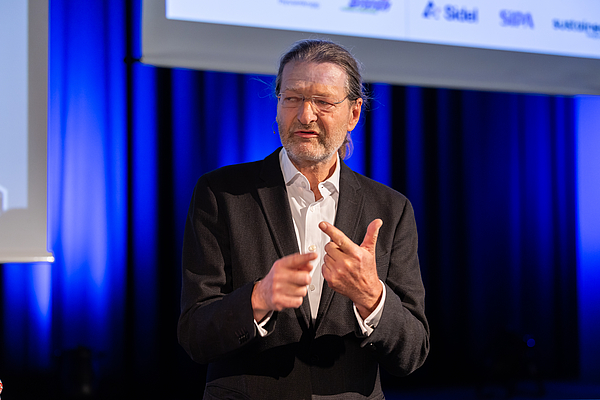
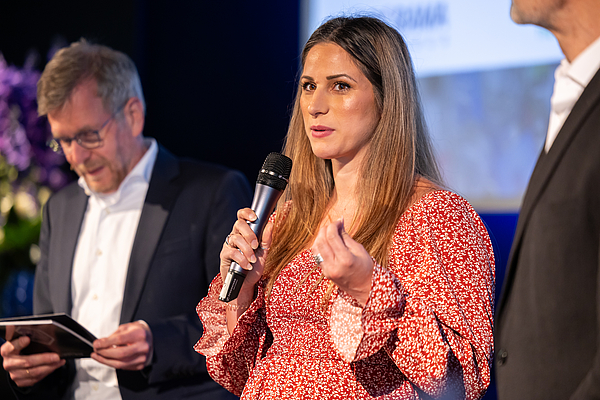
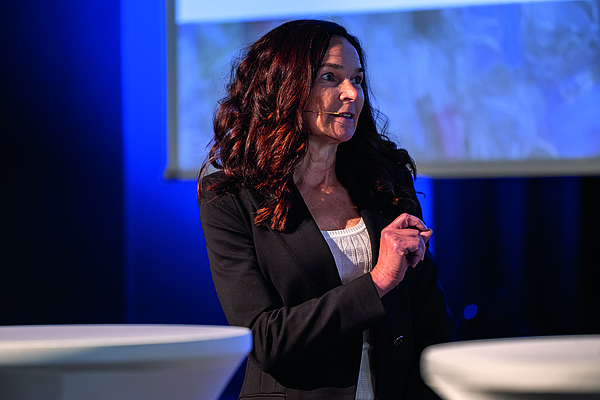
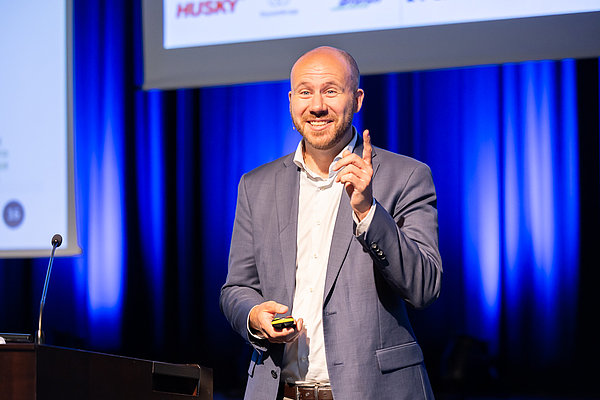
(Photo credit: PETnology/tecPET GmbH)

Back

Performance and conflicting goals

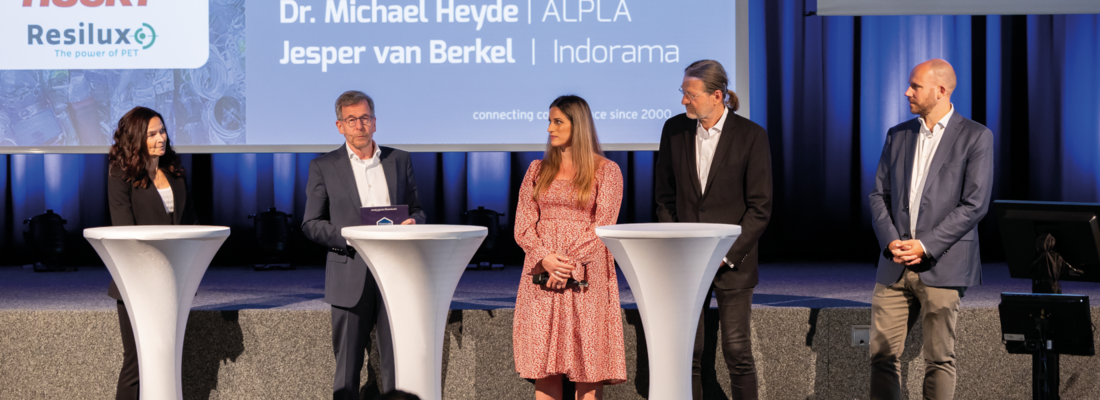
PET Recycling Panel Discussion: Stability is the real key technology

Regensburg, Germany

High rPET content, safe food applications and competitive costs are all to be achieved simultaneously. Is this possible?

Panellists:

  • Jana Walker, CEO, Resilux Switzerland
  • Tania Ferlin, Director of Sustainability Advocacy, HUSKY Technologies
  • Dr. Michael Heyde, Senior Recycling Expert, ALPLA
  • Jesper van Berkel, Head of Enhanced Recycling Projects, Indorama Ventures

Moderator: Dr. Otto Appel, PETnology

Source: comPETence magazine, issue THREE:26


PET is regarded as one of the most compelling examples of how high-quality plastics recycling can work on an industrial scale. Bottle-to-bottle recycling is well established, rPET can be reused in food packaging, and the technical possibilities extend to processing 100 per cent rPET. At the same time, conflicting objectives are on the rise: higher collection volumes can alter the quality of the input material; food safety requires control over the entire material flow; low prices for virgin material are putting pressure on recyclers; and imports that are not clearly verified can damage the system’s credibility.

Four industry experts convened on the PET recycling panel at PETnology Europe 2026 to exchange their views and perspectives:

  • Jana Walker, CEO, Resilux Switzerland 
  • Tania Ferlin, Director of Sustainability Advocacy, HUSKY Technologies 
  • Jesper van Berkel, Head of Enhanced Recycling Projects, Indorama Ventures 
  • Dr. Michael Heyde, Senior Recycling Expert, ALPLA

These were the topics:

  • Why technology alone is not enough? 
  • Why closed-loop systems need reliable regulations? 
  • Where Europe must take action now? 
  • How the performance of PET recycling can actually be measured?

What does performance in PET recycling mean to you personally?

Jesper: For me, two factors are crucial: high recycling rates and consistently good material quality. The particular strength of PET lies in the fact that the material can be reused in equivalent applications – from food packaging to food packaging and from bottle to bottle. Many other packaging materials do not achieve this closedloop cycle in the same way. This is supported by ‘design for recycling’ guidelines, which have been evolving for many years. Performance therefore means not just collecting as much material as possible, but using it to produce high-quality, sustainable products once again.

Jana: I come from an industry that has long thought in linear terms. In the PET sector, I’ve learnt that performance needs to be defined differently: not as the optimisation of a single process step, but as the long-term functionality of a cycle. To achieve this, you need partners with whom you can collaborate on an ongoing basis, make decisions together and also reach compromises. A system is considered high-performing if it functions reliably over many years and can continue to evolve. For me, long-term sustainability is therefore an integral part of the definition of performance.

Tania: We should also ask whether a material that is theoretically recyclable is actually collected, sorted and recycled on a large scale in practice. PET performs very well in this respect. There are very few polymers that achieve comparable recycling performance. The industry often talks about its shortcomings, but too rarely about what is already working. This existing industrial base is an important starting point for further expanding the circular economy.

Michael: A real achievement in the PET sector would be stability. Above all, stability is needed for high quality, high recycled content and a genuine circular economy. Recycling systems are complex networks involving many stakeholders. They only work if the material flows, market conditions and legal framework are reliable. Companies want to take responsibility and develop technical solutions. To do so, however, they need to know under what conditions they can operate and invest in the long term. Stability is therefore not an abstract political demand, but a technical and economic prerequisite.


Who is responsible for ensuring that a used PET bottle is turned back into high-quality packaging?

Jana: Brand owners, bottlers, collection organisations, sorters, recyclers, preform and bottle manufacturers, as well as public authorities: they are all part of the same system. No one can shoulder this responsibility alone. Recycling is not a linear process where one player simply passes the task on to the next. In a circular economy, the stakeholders must decide together how collection, processing and reuse are organised. This is precisely where one of the strengths of the Swiss model lies: the relevant stakeholders sit around the table and work together to further develop the system. In our case, the chain extends from collection through extrusion and decontamination to preform and bottle production. PET Recycling Switzerland also involves bottlers and brand owners in this process. This close collaboration fosters reliability. In our experience, the average rPET content in Switzerland stands at around 60 per cent and continues to rise, even though there is no blanket requirement for every single bottle. Some applications contain less rPET or none at all, whilst others contain significantly more. What matters is that the system-wide average continues to improve.

Michael: Responsibility does not begin at the recycler’s factory gates. Responsibility rests on many shoulders, but it requires clear interfaces within the system. A recycler can technically compensate for fluctuations in the input material, but every additional sorting, washing or decontamination step costs energy and money. Anyone who designs packaging, selects a label or introduces a material into the cycle thereby influences the subsequent processes.

Tania: I would take an even broader view of responsibility. A circular economy requires five elements: design for recycling, real access to collection systems, consumer participation, suitable sorting and processing technology, and, finally, end markets that actually take the recycled material. If just one of these elements is missing, the material remains theoretically recyclable but is not necessarily recycled.

Jesper: The regulatory framework must give concrete form to this shared responsibility. Targets alone are not enough. It must be clear who is responsible for their implementation, how compliance is monitored, and what the consequences are if requirements are not met. Only then will a market emerge in which investment in high-quality circular systems is worthwhile.


What poses the greatest threat to the credibility of PET recycling?

Jesper: A key risk is recycled content whose origin and actual quality cannot be clearly verified. Europe relies on imports, and imports can make sense under fair conditions. However, imported material must meet the same requirements as European material. If there are doubts as to whether a declared recycled content actually comes from recycling, this damages not only the individual supplier but also the credibility of the entire industry. We therefore need verifiable data, traceability and comparable control standards.

Michael: It is precisely this monitoring that is also crucial for enforcing existing regulations. The industry must be able to account for who, in each country, actually checks the proportion of recycled material contained in the bottles . Without robust controls, an imbalance arises: companies that invest in European facilities, quality assurance and food safety find themselves competing with products whose price advantage may be based on different standards or unverified claims. This is both a market problem and a problem of trust.

Jana: Credibility also stems from a system that does not constantly change direction. Companies and consumers need to see that objectives are pursued over the long term. If sustainability is repeatedly sidelined in the face of economic pressure, the principle of the circular economy loses its reliability. We are seeing – unfortunately – that short-term shareholder value is repeatedly given greater weight, whilst sustainability programmes are sidelined. However, a functioning circular economy must not depend on the current economic climate or the priorities set by individual companies.

Tania: Credibility also requires realistic communication. We should make it clear that recycling works when products are designed correctly, systems are accessible and consumers are involved. At the same time, we must not blur the distinction between technical recyclability and actual recycling. Anyone who promotes merely a theoretical property without considering the actual material flow creates expectations that the system cannot fulfil.


How do PET recycling systems differ around the world?

Tania: By international standards, Europe has a good infrastructure, but even here, access is not the same as participation. In the US, 73 per cent of the population has access to recycling facilities, whilst only 43 per cent actually take part. Globally, the informal sector also plays a major role. According to the data used here, around 60 per cent of plastics are collected via informal channels. The industry must therefore recognise that the circular economy does not operate according to the same institutional model everywhere. For me, the fivestep model remains helpful: first, the packaging must be designed to be recyclable. Secondly, consumers need an accessible collection channel. Thirdly, they must actually use this channel. Fourthly, the technology must be capable of sorting and processing the material stream. Fifthly, there needs to be a market for the recycled material produced. It is only the interplay of these steps that turns used packaging back into a raw material.

Michael: The term ‘access to recycling’ should be used precisely. It usually refers to access to an infrastructure through which used packaging can be handed in. This infrastructure may be formally organised, but it may also work in partnership with informal collectors. We operate recycling facilities in Mexico and South Africa, amongst other places, and have seen that such partnerships can work. The key is to define them clearly and to create fair conditions for all parties involved.

Jana: At the same time, recycling remains local at its source, as waste is generated in a specific location and must first be collected there. Short cycles facilitate coordination, quality control and feedback. In the Swiss system, bottlers and brand owners know that the collected material returns to their own cycle. This increases their willingness to take care of the design and quality of the entire system.

Jesper: Europe is in a strong position, but must not rest on its laurels. Whilst European regulations set high standards for production and recycling, it must also be ensured that imported material is produced and inspected in accordance with comparable rules. Otherwise, an ambitious regulatory framework will not automatically lead to a stronger European circular economy.


Should the ‘bottle-to-bottle’ approach always take precedence for PET bottle material?

Jana: Wherever possible, material should be processed within the regional system in which it is generated. To me, a closed loop means turning bottles back into bottles and trays back into trays, whilst closely involving the relevant stakeholders. Technology can expand such systems in the future. Today, however, their effectiveness depends heavily on the stability and proximity of those involved. The local model has not only environmental but also economic advantages. A study by the University of Applied Sciences of Eastern Switzerland in Rapperswil compared various European collection and PET recycling systems. According to the findings, the Swiss system is also cost-effective. The collection of PET bottles is free of charge for consumers, and the collection rate is comparable to that of a deposit-return system.

Michael: If bottle material is diverted to other applications without prioritisation, the packaging industry is deprived of a raw material for which a high-quality closed-loop system already exists. At the same time, the pressure on other sectors to set up their own take-back schemes is reduced. It is easy for a textile manufacturer to advertise that a product contains several recycled PET bottles. However, this does not solve the problem of their own textile waste. If we want to accelerate the circularity of other PET applications, it may make sense to reserve bottle material for bottles in the first instance.

Jesper: Bottle-to-bottle recycling should at least be given a targeted incentive. France already uses an eco-modulation scheme that promotes recycling within the same system. This also takes the regional origin of the material into account. Such incentives within the framework of extended producer responsibility (EPR) can help to reintroduce European bottle material into food packaging. A prerequisite, of course, is that collection and processing meet the requirements for safe food-to-food recycling. If that’s not the case then the PET bottle should still be recycled into suitable applications, avoiding landfilling or incineration.

Tania: From a systems perspective, reliable end markets are crucial. A recycling plant can only operate sustainably if brands and packaging manufacturers take the material off its hands. Bottle-to-bottle offers a clearly defined market with high added value for this purpose. At the same time, the industry should explain transparently why a closed-loop system is more than just the use of any recycled raw material.

_______________

’'Europe is in a strong position, but must not rest on its laurels. Whilst European regulations set high standards for production and recycling, it must also be ensured that imported material is produced and inspected in accordance with comparable rules.'' - Jesper van Berkel

_______________


What problems can modern processing technology solve – and where are its limitations?

Tania: rPET is not identical in every batch. Differences can occur, for example, in granule size, cloudiness or acetaldehyde content (AA). That is why we classify rPET and investigate how a specific material needs to be processed. It is not a question of categorising a batch as good or bad across the board, but of understanding its properties and adjusting the machine parameters accordingly. Modern plants can process up to 100 per cent rPET, and many customers are already taking advantage of this option. Technology can make fluctuations more manageable, but it does not replace the work involved in collection, sorting and material quality.

Michael: In recycling, there is an old rule: there are no fundamentally poor qualities, but rather, above all, inconsistent qualities. As long as the input material is stable, a technical solution can be found for many challenges. However, the properties of this material determine the effort required. Additional sorting, cleaning or decontamination require energy, plant capacity and money. Technology can compensate a lot, but it cannot turn an unstable material stream into a nice raw material with reproduceable properties. That is why we need both: high-performance processes and a consistent ‘design for recycling’ approach.

Jesper: As collection rates rise, so does the pressure to feed more material into the system. This can lead to a conflict of objectives. If sorters are unable to select only the best, clear bottles , the quality of the bales changes. High-quality bales are more expensive, whereas bales containing more contaminants result in higher sorting costs and greater yield losses for the recycler. The technology needs to evolve, but volume and quality targets should be set in such a way that they do not undermine one another.

Jana: A tightly managed cycle reduces response times in the event of technical problems. When introducing a closed-loop system for white milk bottles, for example, we used near-infrared technology to identify a PVC label. The customer’s specification excluded PVC, but their supplier had changed the material without their knowledge. Because those involved were closely networked, the error could be traced back and rectified quickly. The closer the stakeholders are to the material flow, the faster a specific improvement can be made based on a measurement.


How far does ‘Design for Recycling’ need to go?

Michael: ‘Design for Recycling’ is key, but it’s not just about easily recognisable design rules. Chemicals, printing inks and protective coatings on labels are also part of the material cycle. Simply stating that a coating is not in direct contact with food therefore falls short. During the recycling process, traces can find their way into the new product. If we want to achieve higher recycled content in food packaging, the requirements must take all design aspects into account. Jana has just provided a real-world example: PVC labels. They impair the recycling process and can lead to unwanted substances entering the recycled material. It makes no sense to justify such solutions on the grounds of design freedom if the consequences are subsequently borne by sorters and recyclers. The industry must decide which materials are acceptable in a high-quality circular economy and which are not.

Jesper: Extended Producer Responsibility (EPR) schemes can translate this decision into economic incentives. Those who meet the ‘design for recycling’ criteria should be rewarded. Those who fail to meet them and impose additional costs on the system should expect to face corresponding eco-modulation. For this to work, the criteria must be technically sound, and their application must have real consequences. Guidance without incentives or sanctions has only a limited impact on the market. The European PET Bottle Platform’s bottle guidance and PETCORE’s TCEP tray guidelines provide technical starting points. Guidance alone will have limited effect unless the resulting grades carry meaningful economic consequences.

Jana: The example of the milk bottle shows that specifications alone are not enough. Even if a brand owner explicitly excludes PVC, a change in the supply chain may go unnoticed. A functioning circular system therefore requires measurement, traceability and direct communication. Then a design problem can not only be identified, but also quickly corrected at its source.

Tania: For machine manufacturers, ‘Design for Recycling’ means understanding the actual properties of the material at an early stage. The more transparent the composition and the more consistent the material flow, the more precisely process windows can be defined. This improves quality and productivity. The best machine operates most efficiently when it has been designed for the circular economy from the outset.

________________

''The industry must decide which materials are acceptable in a highquality circular economy and which are not.'' - Dr. Michael Heyde

________________


Where is the greatest value lost in the PET stream/PET cycle today?

Michael: It’s still at the collection stage. In several European countries, collection rates are too low. Material that doesn’t even enter a suitable system cannot be recovered by any downstream technology. That’s why the expansion of the circular economy must begin with reliable collection.

Jesper: As soon as a high-quality PET bottle ends up in the wrong disposal stream, a significant proportion of its value is lost. This shows how closely consumer information, infrastructure and sorting quality are interlinked. Higher recycling targets only help if sufficient suitable material actually enters the correct stream.

Tania: This is precisely where the gap between access and participation lies. A collection bin within easy reach does not in itself guarantee that a bottle will end up there. The industry should therefore communicate more directly with consumers and explain that their decision at the end of a product’s life either enables or prevents the next production cycle.

Jana: After collection, sorting, cleaning and decontamination remain crucial. With each cycle, the colour in particular can change; higher rPET content can lead to a darker or more greyish appearance. A well-controlled material flow limits these effects. At the same time, we should discuss which visual expectations are genuinely technically necessary and which stem from familiar marketing imagery.


Do brands and consumers need to be more accepting of visible differences in rPET?

Tania: Some brands in the US are already pointing out that a bottle appears slightly greyish because it is made from 100 per cent recycled material. I think that’s an important approach. The paper industry has succeeded in establishing small inclusions or a less-than-perfect surface as a visible sign of recycling. A similar shift in perspective would also be possible with PET: a slight colour variation could be viewed positively, rather than automatically being regarded as a quality defect.

Jana: The visual change is real, particularly when material is recycled multiple times. Proper sorting, cleaning and decontamination therefore remain important. But the industry shouldn’t make every deviation from virgin material a criterion for exclusion. If a product is safe and fulfils its function, a visible history of recycling can be part of its quality.

Michael: I’m not sure whether consumers actually have the greatest concerns. It is often the brands’ marketing departments that demand a finish identical to that of virgin material. The industry should examine more closely which expectations come from the market and which it perpetuates itself. Honest communication could create greater scope.

Jesper: Fillers and converters can lead by accepting modest variations in the colour or clarity of rPET packaging, provided that food safety and product performance are maintained in tact. By using more rPET and explaining visible differences to consumers, they can help make rPET a normal choice before higher legal quotas take effect. This would strengthen rPET demand today and demonstrate that circularity can advance ahead of regulation.


Is the European regulatory framework sufficient to stabilise the market?

Jesper: In my view, the EU Packaging Regulation (PPWR) is a groundbreaking piece of legislation. What is crucial now is its proper implementation. The market needs clearly defined responsibilities, effective incentives and equally clear consequences if targets are not met or systems are exploited. This also applies to imports. They should not be blocked, but must meet the same requirements as European recycled materials. European producers face intense price pressure in both virgin and recycled PET (currently under the same taric code). The PPWR can help create a demand for recyclates, provided its targets are consistently enforced and imported materials meet equivalent requirements (in practice not only on paper). A stable market needs competitive European capacity for both vPET and rPET.

Michael: Recycling must not depend solely on whether the price of virgin material is currently high or low. If it rises, interest in recycled material grows; if it falls, demand plummets. A circular economy cannot invest stably under such conditions. We need a social consensus that is translated into binding rules and actually enforced. My greatest concern is that the regulations planned for 2030 will be watered down again before they come into force. Companies are investing today on the basis of these targets. If policymakers later hesitate, these efforts could be undermined. Credibility therefore also means reliably sticking to agreed paths.

Jana: Switzerland demonstrates that a system can achieve high average rPET content even without identical requirements for every bottle, provided that the stakeholders pursue common goals. At European level, however, we are seeing greater fluctuations. Regulation should therefore not merely set quotas, but facilitate stable cooperation and long-term planning.

Tania: The industry must play an active role in shaping these rules. We cannot simply hold governments responsible and then criticise them for failing to take technical realities sufficiently into account. As the saying goes in Washington: ‘If you’re not at the table during political discussions, you’re on the menu.’ At present, the plastics industry often feels more like the subject of the debate than an active partner. We need to change that.



Where does the industry need more cooperation – and where should competition continue?

Jesper: Within Europe, healthy competition should continue over products, technology, efficiency and quality. Producers of vPET and rPET, converters and brands all benefit from preserving a competitive European industrial base where all options are present (i.e. EU industry and imports). At the same time, the entire European industry is under pressure from overcapacity outside Europe and from imported recycled material, which is not always produced under comparable conditions. The European PET value chain should cooperate on common challenges like collection and sorting, design for recycling, reliable data and certification and fair enforcement of EU rules for both domestic and imported material. Competition remains important, but it must take place in a level playing field.

Tania: When it comes to advocacy and consumer communication, we should see ourselves less as competitors. Whilst PET companies do compete in the market, they share a common interest in ensuring that plastics recycling is socially accepted and politicallyunderstood. Our real material competitors are aluminium, glass and paper. We should therefore work together to explain more clearly to the public and policymakers what PET recycling systems are already achieving and what they still need.

Michael: Europe must decide whether, in future, it will predominantly incinerate its plastic waste and source recycled materials from other regions, or whether it wishes to maintain its own circular systems. The latter requires common standards and consistent enforcement. Without this foundation, competition may reward cheaper offers in the short term, but in the long term it will destroy infrastructure and expertise.

Jana: Collaboration is needed above all at the interfaces. As soon as collection, sorting, recycling, packaging production and brands are closely linked, problems can be solved more quickly. Competition can then promote innovation and efficiency within a stable system. Without this common framework, however, it easily leads to costs simply being passed on to the next player in the chain.


If you could make a single decision to advance PET recycling, what would it be?

Tania: I would strengthen consumer confidence in recycling. People need to be convinced that their participation makes a difference. Where systems are lacking, they should also exert political pressure to establish suitable infrastructure. To achieve this, the industry must communicate more directly and counter the negative perception of plastic with concrete examples of functioning circular systems.

Jana: I would accelerate the next step in the Swiss circular economy. We have already reached a high standard with drinks bottles and only face technical limitations when rPET content is very high. Now we want to extend this successful system to milk bottles, trays and other PET packaging. In this way, a strong bottle loop can be developed into a broader PET loop.

Michael: My priority would be to ensure that the regulations set out in the PPWR for 2030 actually come into force. The industry needs the certainty that today’s investments and development work will not be undermined by subsequent political backtracking.

Jesper: I would strengthen confidence in investment in Europe. A multinational company can also channel capital into other regions. Europe must therefore create conditions under which new and existing plants have reliable prospects. At the same time, I would invest more resources in professional advocacy so that the industry can play a constructive role in implementing the PPWR.


How would you recognise, in five years’ time, that this discussion marked a turning point?

Tania: By the fact that the industry acts collectively in advocacy and communication, and confidently positions its material solutions against aluminium, glass and paper.

Jesper: By the fact that the PPWR is being consistently implemented and customers are using higher proportions of recycled content even before the legal deadlines.

Michael: By the fact that implementation has visibly accelerated since this discussion and has not been held back by hesitant decisions.

Jana: By the fact that the circular economy is linking collection, sorting, technology and the reuse of materials even more closely, resulting in a sustainably strong PET industry.

_______________

www.resilux.com       www.husky.co 

www.indoramaventures.com       www.alpla.com

PETnology's Resource Guide
comPETence center

The comPETence center provides your organisation with a dynamic, cost effective way to promote your products and services.

Find out more

Current Magazine Cover
Our premium articles
comPETence
magazine

Find our premium articles, interviews, reports and more
in 3 issues in 2026.

Find out more
Current issue