With more than 240 million residents, Uttar Pradesh in the north of India is the most populated state on the subcontinent. It’s also home to a representative section of this extremely ethnically, linguistically and religiously diverse country, as here especially the cultures of the north meet those of the south. The climate is also extreme: during the hot months of March to July, temperatures can soar to a maximum of 50°C. For the people of this region, sufficient intake of fluids is therefore essential to their survival.
Accordingly, the potential for the beverage industry is huge. Up until 15 years ago, carbonated soft drinks were still the privilege of rich and middle-class families. This has changed: soda pop is now affordable for and accessible to all levels of society, which in view of the logistical challenges prevalent in India is not necessarily a given.
Biggest Coca-Cola bottler in India
One of the country’s big players is Coca-Cola India. The concern itself assumes responsibility in particular for local brand management and marketing. Production and distribution are managed entirely by independent regional bottlers. The largest of these is SLMG Beverages, a consolidation of four bottlers all run by brothers of the Ladhani family of entrepreneurs. They’ve worked for Coca-Cola in Uttar Pradesh and its neighboring regions for more than 30 years. Through the takeover of a further bottler, they recently also secured the license for the state of Bihar. This means that in the future the company will supply around 350 million people with soft drinks. One of its eight associated filling facilities is located in Chhata, not far from the culturally significant metropolis of Agra with the world-famous Taj Mahal.
Growth engine TriBlock
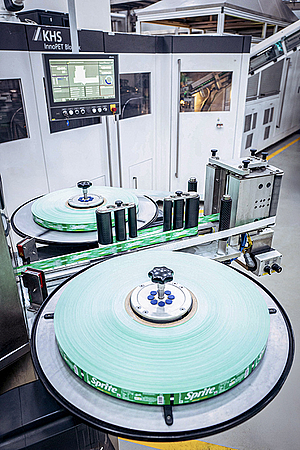
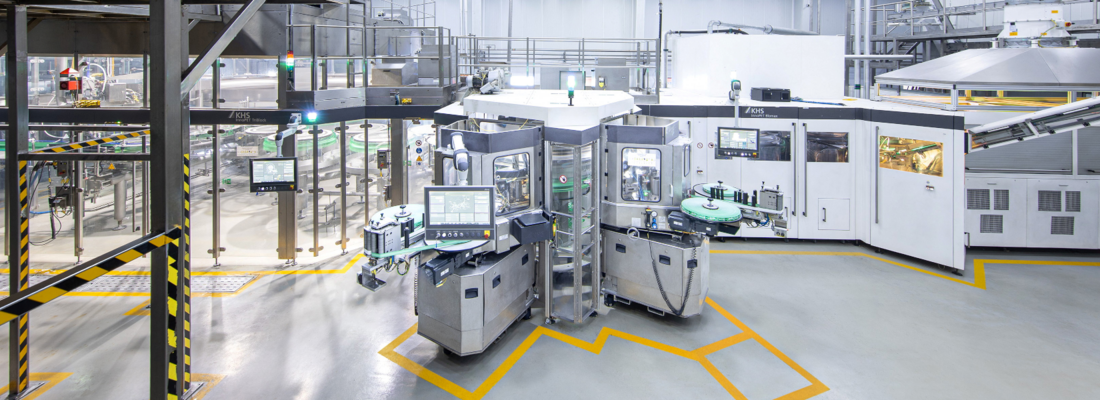
The newest of the six beverage lines in Chhata was delivered and installed by KHS. The heart of the line is the InnoPET TriBlock, a modular block system comprising a stretch blow molder, roll-fed labeler and filler that’s particularly low on space. It processes up to 48,000 non-returnable PET bottles an hour holding between 250 milliliters and two liters. During the high season, the main focus is on small singleserve formats. The bottling plant now fills approximately 15.4 million containers per annum.
“In 2023, our output rose by almost 35% over the previous year and in 2024 we again grew by 25%,” explains Sriharsha Chilukuri, who is senior general manager of the plant. “We produce approximately 60% of our soft drinks in PET bottles on the new line.”