Preforms behave unpredictably from labs to factories
Traditional inspection methods identify geometric and material-related issues. However, two preforms can meet the same specifications, pass visual inspection and still exhibit significantly different heating and blowing behaviours.
Due to the disconnect from labs to reality, tangible problems arise, such as increased machine profiling, greater troubleshooting effort, more operator interventions and reduced stability, with variations only appearing after preforms have been shipped and introduced to the bottle manufacturing process, by which point lines have already inherited the problem. The result can be increased troubleshooting, production inefficiencies and valuable engineering time spent diagnosing issues that originated long before the preform reached the bottle line.
Measuring temperature profiles in identifying PET bottle imbalances
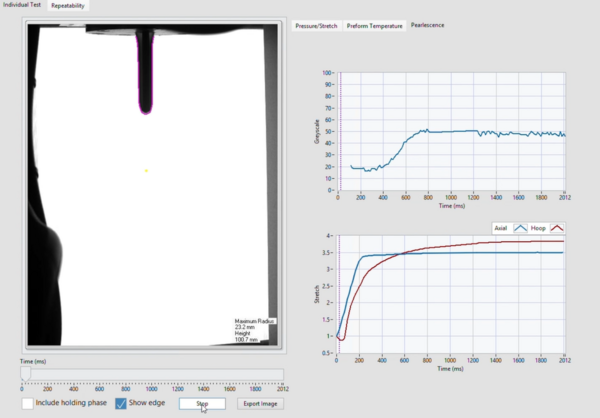
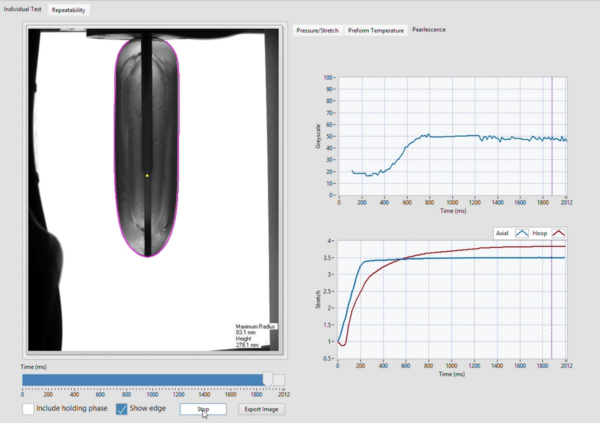
Blow moulding performance is heavily influenced by preform temperature behaviour. If a preform heats differently, it will stretch differently. And if it stretches differently, the bottle performance changes too.
Earlier this year, an investigation using BMT’s THERMOSCAN solution resurfaced just how difficult these issues are to identify. In this scenario, a bottle production process that had previously operated successfully began to experience quality variations, despite having equipped the same recipe and oven settings as before. Further research into this lapse revealed that variations originating within the injection moulding process itself had influenced thermal behaviour, and were in turn creating an inconsistent blowing performance. Therefore, the bottle line was not the root cause. The preform was.