The investment was made to increase material flexibility, reduce energy consumption during extrusion and create the basis for processing food-grade recycled PET.
Originally established as part of an agricultural business, the company initially produced thermoformed packaging for its own fruit and vegetable products. Today, it also supplies customers throughout the food industry. As production capacities continued to expand, the company gradually converted its sheet production from polypropylene (PP) to polyethylene terephthalate (PET). This transition was driven by increasing requirements for recyclable packaging and the growing use of recycled content within the European circular economy. At the same time, the company aims to become less dependent on raw material availability and price fluctuations by being able to process a wide range of PET feedstocks.
The change to PET, however, introduced a major processing challenge. PET is hygroscopic and readily absorbs moisture from the surrounding environment. In conventional extrusion processes, the material must therefore be dried before processing to ensure consistently high sheet quality—particularly when recycled material is used.
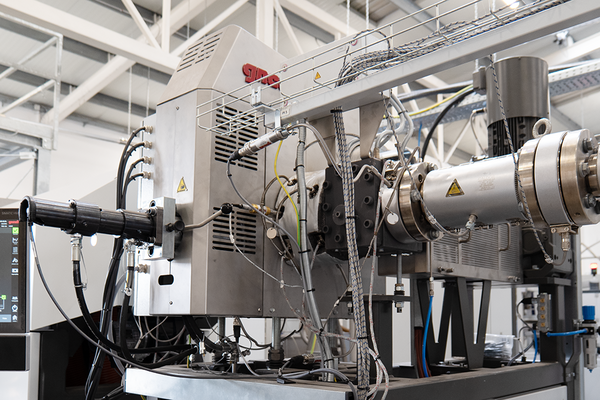
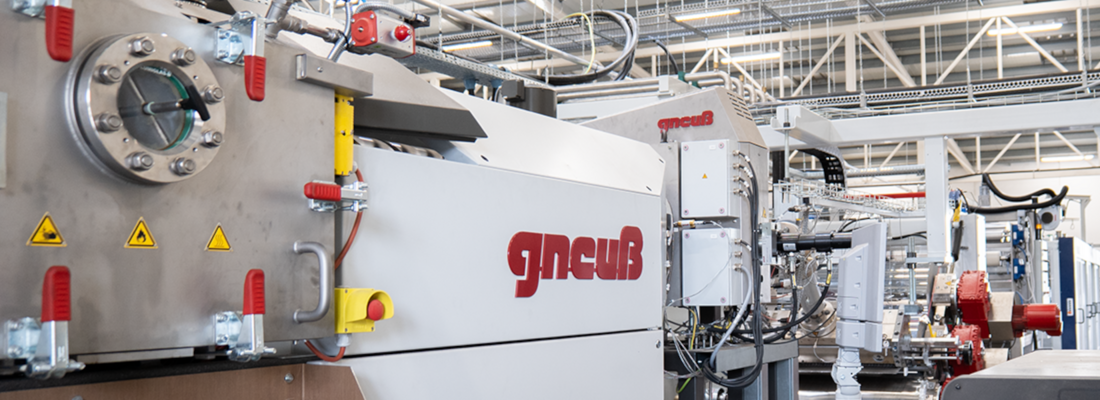
The company therefore looked for an extrusion solution capable of processing different PET feedstocks without upstream material drying while maintaining maximum energy efficiency. The choice was a Gneuss MRS 110 extruder with a throughput of up to 600 kg/h of PET. Since its commissioning in early 2025, the system has successfully met both requirements.