2D codes are setting the pace for the future
The future direction in packaging is clear. Across food, beverage, pharmaceuticals, FMCG, 2D codes are rapidly becoming the new standard. Their promise is compelling: more data in less space, improved traceability, greater flexibility in information management, stronger consumer engagement, and better control across the value chain – with relevance extending to emerging requirements such as the EU Digital Product Passport.
With GS1 standards gaining global momentum, the strategic importance of 2D codes is no longer in question. What remains unresolved, however, is how to implement them in real production environments where speed, uptime, costefficiency, and maximum flexibility across a wide variety of packaging materials still define success.
Because this is where theory and practice have often diverged. The more data a code must carry, the more critical print precision and readability become. Yet in high-volume packaging operations, no manufacturer is willing to trade line speed for better code quality. At the same time, the transition to GS1 2D codes brings two further very practical challenges. First, reliable inline printing is not yet solved for every packaging material and format, especially on challenging substrates and packaging formats such as flexible films, mono-material pouches, rigid plastics, curved bottles or tubs, glass or metal packaging, and many kinds of cartons and labels, including glossy or nonporous surfaces. Second, 2D codes need to be integrated into existing production lines without major disruption, added complexity or additional handling steps. This is particularly important because retailers such as Tesco* have made clear that their primary interest lies in better control of bestbefore dates. That means the code can no longer simply be pre-printed; it must be printed online, directly on each individual product during production.
Existing coding technologies all have clear strengths, but they also present limitations when it comes to 2D code printing at scale. Some deliver the resolution required. Others offer the speed, but not the high-resolution print quality, substrate flexibility or reliability needed across real production environments. Until now, the industry has had to live with this trade-off.
A new approach: 2DJET™ from LEIBINGER
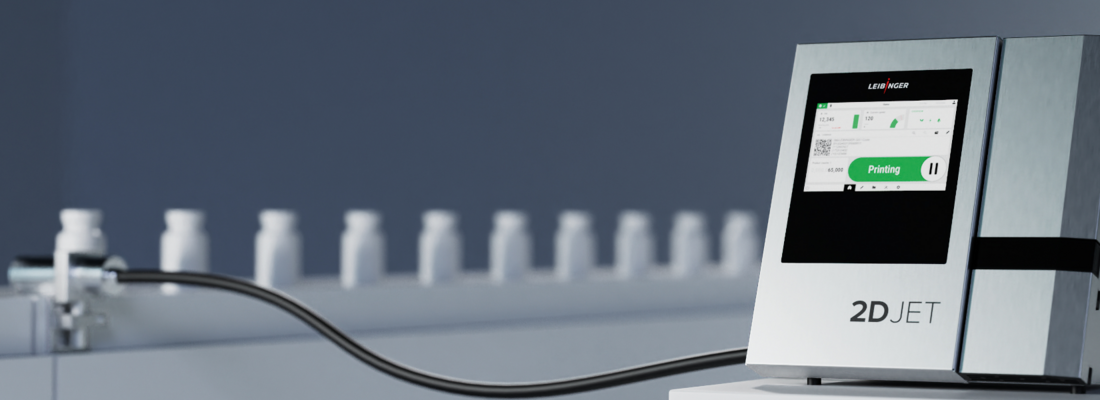
LEIBINGER is now taking the next step in industrial coding. As an innovation leader in CIJ, the company brings decades of unique expertise in high-speed, high-reliability coding. It also offers extensive ink know-how, built on the development and in-house manufacturing of a broad ink portfolio. This combination uniquely positions LEIBINGER to open a new chapter in packaging identification. With 2DJET™, LEIBINGER is introducing a new coding class developed specifically for the next generation of packaging requirements.
The new system features a continuous ink supply designed for uninterrupted production. It delivers razor-sharp codes at up to 300 dpi and printing speeds of up to 120 m/min, with the capability to print QR codes up to 33 x 33 modules. Built on LEIBINGER’s deep understanding of industrial coding in real production environments, this newly developed approach redefines what manufacturers can expect from 2D coding.
Built for a wide range of packaging
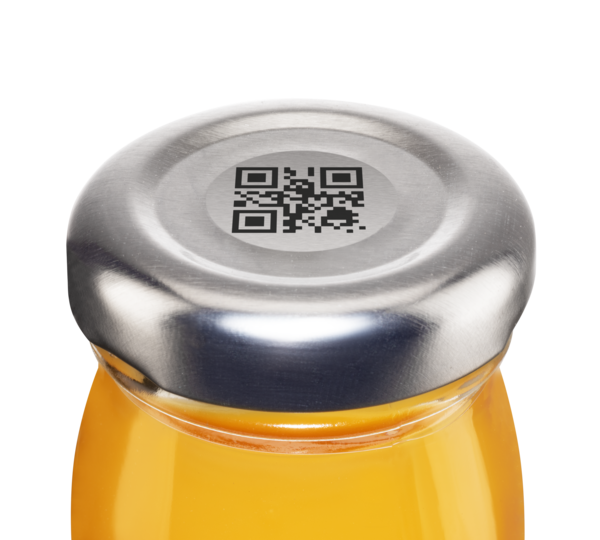
What makes this new class especially relevant for packaging manufacturers is that it has been designed not only around print quality, but around real-world production needs. As a touchless printing technology, 2DJET™ brings with it the core advantages that have made CIJ so successful in industrial environments. It can be used across a broad variety of packaging materials and is suitable for different product shapes and surface conditions – from flat to curved, and from smooth to more challenging surfaces.
With a throw distance of 8 mm, the compact printhead can be integrated into production lines with a high degree of flexibility, making installation easier even where space is limited or packaging geometries vary.