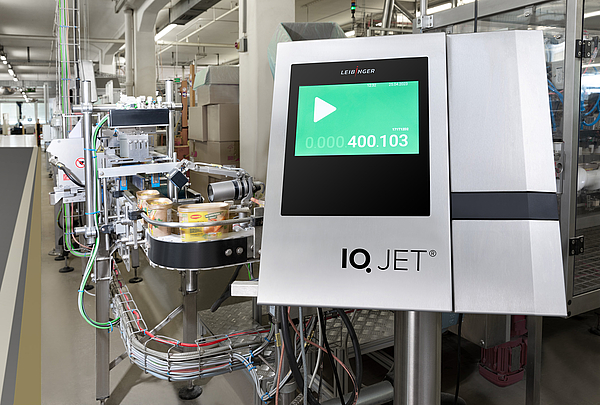
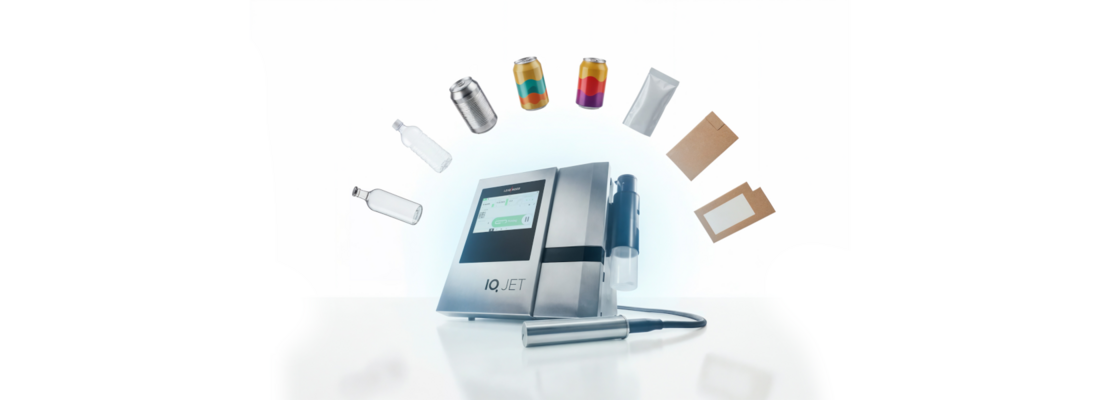
One topic shaping the packaging industry is the transition from 1D barcodes to GS1 2D codes as part of the 2D migration (GS1 Sunrise 2027). Printing reliable, scannable codes on diverse materials remains a key challenge – especially in view of future requirements such as the digital product passport (DPP). Data-rich 2D codes with variable content must be printed directly on the production line, increasing demands on print precision, contrast, and process stability. Even minor factors such as substrate reflection, surface texture, or ink adhesion can influence scan results. LEIBINGER supports customers with strong application expertise, ensuring reliable readability and efficient integration with minimal impact on existing lines.
The reliable foundation of all LEIBINGER printers lies not only in the unique automatic nozzle seal, but also in intelligent hydraulic and ink management, where ink is kept continuously circulating in a closed loop. A unique dualchamber pressure tank system maintains stable viscosity, constant pressure and long component lifetime. A prime example is the IQJET, which can operate for up to five years without maintenance. In contrast, many conventional printers still rely on gear pumps that are prone to wear, leading to frequent and costly replacement of parts.
LEIBINGER also uses a carefully engineered approach in the ink tank: an automated agitator keeps the ink moving – especially relevant for pigmented inks – to reduce sedimentation and deposits and maintain stable ink properties. This supports consistently high contrast of the codes over the long term.