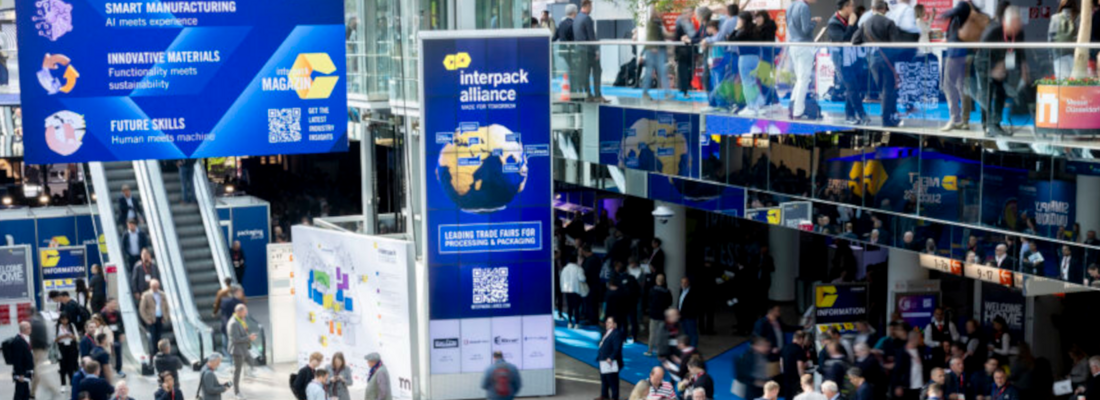
interpack 2026 sent a clear signal: the packaging industry is more closely connected, more innovative and more dialogue-oriented than ever before. This momentum was immediately visible in the exhibition halls. High visitor traffic, intensive discussions and a consistent international presence shaped the atmosphere. Everywhere, it was possible to experience the determination with which companies are working on solutions for the future. Ideas were discussed, tested and decisions were made. The entire value chain was presented in live.
From 7 to 13 May, 2,804 exhibitors from 65 countries and trade visitors from 161 countries came together in Düsseldorf on the fully booked exhibition grounds. Of all visitors, 75 percent came from outside Germany, including 28 percent from outside Europe. Around 100 additional companies were represented at components, the supplier trade fair held in parallel. This made interpack 2026 the largest edition in its history in terms of exhibitors, underlining what was clearly felt in the halls: this was an event with exceptional impact.
“That was a top interpack. Busy halls, intensive exchange and concrete projects showed the strength of this global community. interpack is the most important meeting place for the industry worldwide, and this edition impressively confirmed that,” said Thomas Dohse, Director of interpack, at the close of the trade fair.
For seven days, concrete solutions and partnerships took centre stage. Many discussions led to projects and investment decisions. The trade fair thus confirmed its role as the leading platform for the global processing and packaging industry – with strong visitor attendance, particularly from the food and pharmaceutical industries, as well as a high quality and density of leading and innovative suppliers.
Market growth – industry under pressure
interpack 2026 took place at a time when the industry is undergoing transformation. Demand for packaged products continues to rise, but requirements for materials, production systems and supply structures are changing. A key focus at the trade fair was the European Packaging and Packaging Waste Regulation (PPWR), which marks a turning point for the industry in many respects.
interpack made one thing clear: companies are not responding in isolation, but systemically. Exhibitors presented solutions in which materials, machines and processes are increasingly considered together and coordinated with one another. In this way, interpack confirms its role as an economic driver for the industry: this is where projects are initiated, investments prepared and economic momentum generated.