Advertisement
PETnology Europe 2026
Back

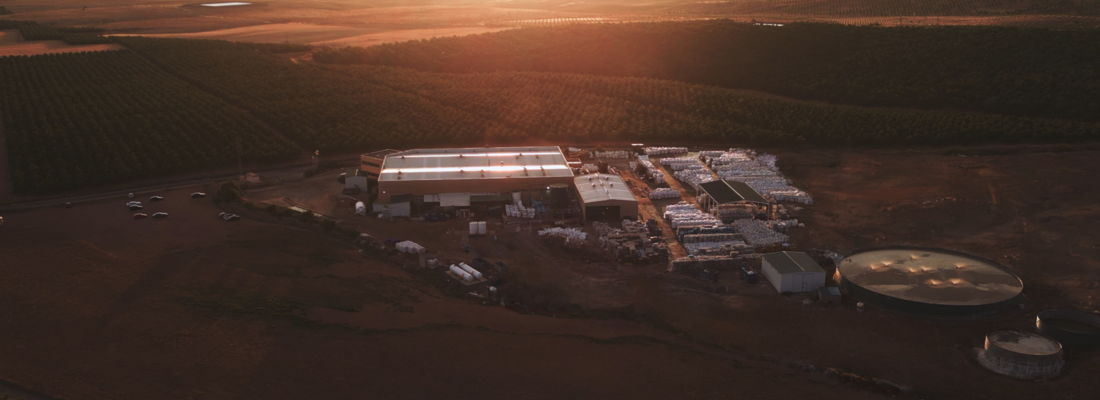
Sulayr’s operations based in Granada, Spain.(Photo credit: TOMRA)

Recycling

Sulayr and TOMRA partner to scale tray-to-tray recycling in Europe

Asker, Norway

Sulayr Recycling, based in Granada, Spain, has strengthened its transparent-to-transparent, tray-to-tray PET recycling operations by integrating advanced sorting solutions from TOMRA Recycling. Specializing in complex and multilayer thermoformed PET trays, Sulayr transforms post-consumer material into new food-grade trays with full traceability. By optimizing its sorting infrastructure, Sulayr is establishing a stable and scalable model for circular PET packaging in Europe.

Recycling PET trays at scale is one of the most demanding challenges in plastics recycling. The combination of complex structures, mixed input streams and strict quality requirements leaves little margin for error – particularly when the objective is to turn post-consumer trays back into new food trays. More than five million tons of PET packaging enter the European market annually. While bottle-to-bottle recycling is already well established, PET trays – representing roughly 25% of this volume – remain a vast untapped resource. Scaling tray-to-tray recycling is therefore both a technical challenge and a strategic imperative for advancing circularity in PET packaging. This is precisely where Sulayr Recycling focuses its expertise.

Day by day, the company is building a recycling model that is unique in the world and based on real circularity: keeping transparent PET trays in a closed loop and returning them to the market as new, food-grade trays. This transparent-to-transparent, tray-to-tray recycling approach for complex, multilayer thermoformed PET trays is the strategic backbone of Sulayr’s operations, ensuring full traceability and food-grade compliance.

Currently serving over 100 customers across Europe, Sulayr produced more than 50,000 tons of recycled PET in 2025 alone – equivalent to a production capacity of over four million trays per day.

To maintain this momentum on an industrial scale while meeting increasingly strict market and regulatory demands, Sulayr recognized the need to further enhance process stability and sorting precision. This led the company to seek a technology partner capable of supporting its next phase of growth.

A challenging input amid rising expectations

The material Sulayr processes is primarily sourced from post-consumer PET tray streams via Extended Producer Responsibility (EPR) systems. Depending on its origin and the time of year, this input material varies significantly and often includes other PET types, multilayer structures and polymer contaminants.

“As quality requirements evolved, stability became just as critical as purity,” explains Sergio Collado, Chief Technology Officer at Sulayr. “For tray-to-tray applications, you need a process that delivers consistent results every single day – not just under ideal conditions.”

A shared responsibility for results

To achieve this level of consistency, Sulayr engaged TOMRA Recycling as a strategic partner to co-design and optimize the sorting process.

TOMRA’s involvement went far beyond equipment selection: they provided expert consultancy on optimal machine positioning and the essential pre-treatment steps required to ensure material reaches the sorting units in peak condition. The objective was to engineer a stable, scalable process architecture rather than simply installing standalone machines.

“This was far from a standard supplier relationship,” says Jesús Espinar, Area Sales Manager at TOMRA Recycling. “We collaborated closely with Sulayr to align with their targets, material characteristics and operational constraints. Our shared responsibility was to design a process that performs reliably and consistently delivers the high quality required by current European regulatory standards, while providing the flexibility to adapt as those requirements become even more stringent in the future.”

Technology integrated into the process

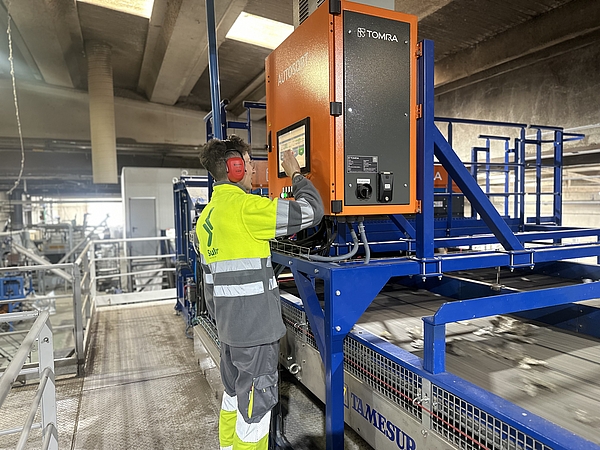
The core of the solution is a dual-track AUTOSORT™ and an INNOSORT™ FLAKE system, both fully integrated into Sulayr’s industrial configuration. The process chain incorporates material reception, optical sorting at tray level, washing, grinding, flake purification and final extrusion into tray-grade rPET.

At the tray level, the dual-track AUTOSORT™ – a multifunctional sorting allrounder – is critical for managing the high complexity of the input material. Its unique configuration enables two independent sorting steps within a single unit. In the first track, PET Clear/Light Blue (CLB) is positively ejected from the mixed stream. In the second track, the remaining non-target materials are removed through negative sorting, where contaminants are ejected to leave a high-purity final product. This combination maximizes both recovery and final purity while maintaining high throughput.

The ability of the AUTOSORT™ to reliably detect and separate monolayer and multilayer PET trays – even within highly mixed streams – makes it uniquely suited for demanding tray-to-tray applications where precision and long-term stability are non-negotiable.

Following shredding, the INNOSORT™ FLAKE performs the final purification step to secure the needed critical quality levels required for food-grade applications. The system detects flakes by polymer type, color and transparency in a single sorting step, ensuring precise separation even at small particle sizes.

The unit’s multi-stage configuration enables sequential purification steps, while a dedicated recovery stage allows any valuable PET still present in the rejected fractions to be reintroduced into the process. This recirculation logic maximizes overall yield and supports economic efficiency.

The result of this integrated setup is consistently high and stable purity levels above 99.8% under real operating conditions. This enables immediate reuse in food-grade applications and supports Sulayr’s goal of transparent tray-to-tray recycling. The quality achieved is comparable to virgin material, reducing dependence on primary PET and enabling converters to meet demanding recycled-content requirements without compromising functionality.

Operational impact and strategic partnership

At the same time, material recovery has increased and the volume of rejects has been reduced, further strengthening both quality and operational profitability. While the primary target fraction remains transparent PET trays, certain colored tray fractions can also be valorized depending on market demand and customer specifications, adding significant flexibility to Sulayr’s industrial model.

“What made the difference was how closely we worked together with TOMRA during integration,” says Antonio Jesús Marcos, Head of Marketing at Sulayr. “It was not just about installing equipment. We aligned on process details, performance targets and long-term stability. The focus was always on results under real operating conditions, rather than on theoretical figures.”

Stability that enables commercial growth

The increased stability of output quality has allowed Sulayr to meet stricter customer specifications and access new customer segments. This includes converters and packaging producers requiring certified, traceable recycled content for food-grade trays across multiple European markets. This consistency paves the way for higher value-added applications and strengthens Sulayr’s position as a reliable strategic supplier in a tightly regulated environment, where long-term supply security and documented compliance are increasingly decisive.

A reference for scaling real circularity

As pressure grows to recycle more complex packaging formats, PET trays are becoming a key focus across Europe. The Sulayr project demonstrates that advanced sorting technology, combined with close collaboration and shared operational responsibility, can make tray-to-tray recycling of complex PET streams viable on an industrial scale. Beyond the technical solution, the partnership has unlocked new business opportunities and strengthened Sulayr’s position in an increasingly demanding market.

“Advanced technology is essential,” says Jesús Espinar. “But what really makes projects like this work is the partnership approach. When strong partners bring their combined expertise to the table and work closely together, tray-to-tray recycling can be scaled reliably. This benchmark process for the recycling industry is definitive proof of that.”

www.tomra.com   www.sulayrpet.com

PETnology's Resource Guide
comPETence center

The comPETence center provides your organisation with a dynamic, cost effective way to promote your products and services.

Find out more

Cover
Our premium articles
comPETence
magazine

Find our premium articles, interviews, reports and more
in 3 issues in 2026.

Find out more
Current issue