The problem: looking the same, being different
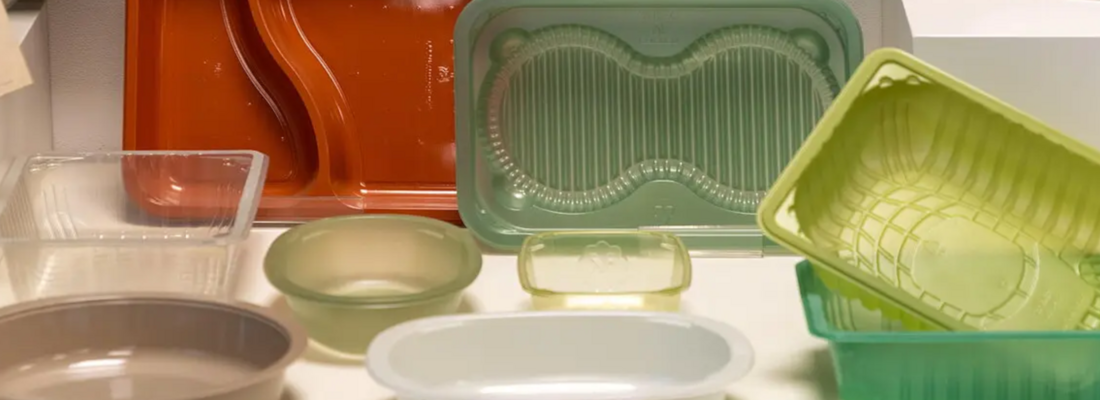
For food-grade rPET, EU Regulation 2022/1616 stipulates that only packaging which has already been in contact with food may re-enter the food cycle. A ready-meal tray is permitted; a blister pack for screws is not. Chemically, both are PET and therefore identical to conventional near-infrared (NIR) sorting systems.
"Achieving the stringent standard required for food-grade recycling has always demanded exceptional precision in sorting," says Simone Tirelli, Technical Project Manager at Faerch. "Here at this plant, we are committed to transforming plastic waste into valuable resources."
The solution: sensor fusion and AI recognition
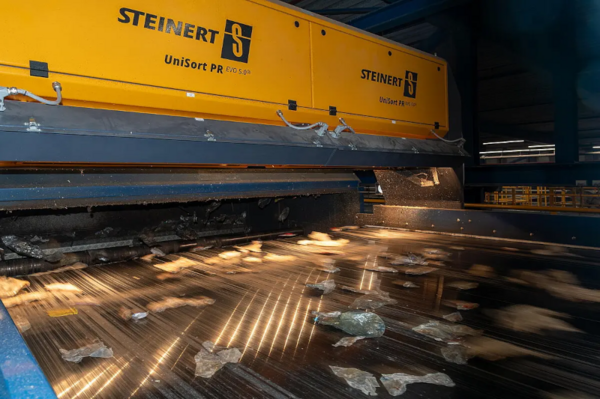
Cirrec deploys three STEINERT UniSort PR EVO 5.0 systems that analyse each tray individually. The machines use sensor fusion: a hyperspectral NIR camera captures the chemical composition whilst a colour camera identifies visual characteristics. The key feature is that both sensors view the same point on the material at the same time. This improves data quality for AI training and, in turn, sorting accuracy.
The combination of the two data streams enables STEINERT Intelligent Object.Identifier (IOI), an AI-based sorting programme trained in this case to recognise food packaging. IOI detects characteristic patterns such as ready-meal tray shapes, typical printing and surface textures.
STEINERT sorting achieves the purity of over 95 per cent required for food-grade recycling, thereby creating the conditions for all subsequent process steps.